
A fall furnace maintenance checklist prepares heating systems for winter by replacing filters, testing thermostats, cleaning vents, and scheduling professional inspections. Highland Heating & Cooling recommends checking carbon monoxide detectors and clearing the furnace area. Furnace maintenance fall steps improve performance, maintain airflow, and reduce unexpected breakdowns during the coldest months.
Key Takeaways
- Replacing or cleaning the furnace filter every 1 to 3 months prevents airflow blockage and blower strain.
- Testing carbon monoxide detectors and installing fresh batteries protects against undetected leaks.
- Clearing furniture, rugs, and curtains from vents restores airflow and eliminates cold spots.
- Scheduling a fall inspection catches worn belts, failing ignitors, and dirty burners before winter emergencies.
Why Does Your Furnace Need a Fall Checkup?
A furnace maintenance fall inspection catches small problems before they become winter emergencies. A thorough checklist prepares the heating system for the stress of daily use when temperatures drop. Without this checkup, homeowners risk losing heat on the coldest night of the year. A failed furnace also creates dangerous situations involving carbon monoxide leaks and fire hazards.
What happens when a furnace runs with a dirty filter?
A clogged filter forces the blower motor to work harder. This extra strain increases energy consumption and shortens the equipment’s lifespan. The system also distributes dust, pollen, and other particles throughout the home, degrading indoor air quality.
How does a fall checkup prevent a mid-winter breakdown?
A fall hvac service identifies worn belts, failing ignitors, and dirty burners long before they cause a shutdown. Technicians clean and calibrate critical components. This proactive step maintains proper airflow, improves heating performance, and dramatically reduces the chance of an unexpected failure during a cold snap.
A professional inspection goes far beyond changing a filter. The furnace safety checklist includes verifying heat exchanger integrity, testing safety switches, and confirming proper venting. Each of these checks protects residents from carbon monoxide exposure. A residential HVAC tune-up in Noblesville addresses these exact risks with a comprehensive inspection, cleaning, and calibration session conducted by a certified technician. Homeowners who skip this routine step often discover hidden cracks or obstructions only when the system fails under load.
Highland Heating & Cooling serves Noblesville, Indiana, with an understanding of how freezing winter nights punish neglected equipment. The company’s professional heating solutions keep homes comfortable through every season. Committing to an annual fall checkup protects household safety, preserves the furnace investment, and delivers peace of mind before harsh weather arrives.
What DIY Tasks Should You Complete First?
A proper furnace maintenance fall routine starts with several simple tasks homeowners can complete before calling a professional. These steps improve safety, restore airflow, and prevent the system from failing when temperatures drop. Skipping them risks a cold house and expensive emergency repairs.
What is the most important DIY furnace maintenance task?
Replacing or cleaning the furnace filter ranks as the single most critical homeowner task. Filters trap dust, pollen, and debris that choke airflow and strain the blower motor. Homeowners should replace or clean the filter every 1 to 3 months, according to Summers & Smith. A fresh filter keeps energy bills lower and indoor air cleaner throughout the heating season.
How do vents and registers affect heating performance?
Blocked vents force the furnace to work harder and create uneven temperatures across rooms. Homeowners should walk through every room and confirm that furniture, rugs, and curtains sit clear of supply and return registers. This simple check restores proper airflow and eliminates cold spots without any tools or expense.
The remaining furnace safety checklist items address hidden dangers and control issues. Follow these steps in order:
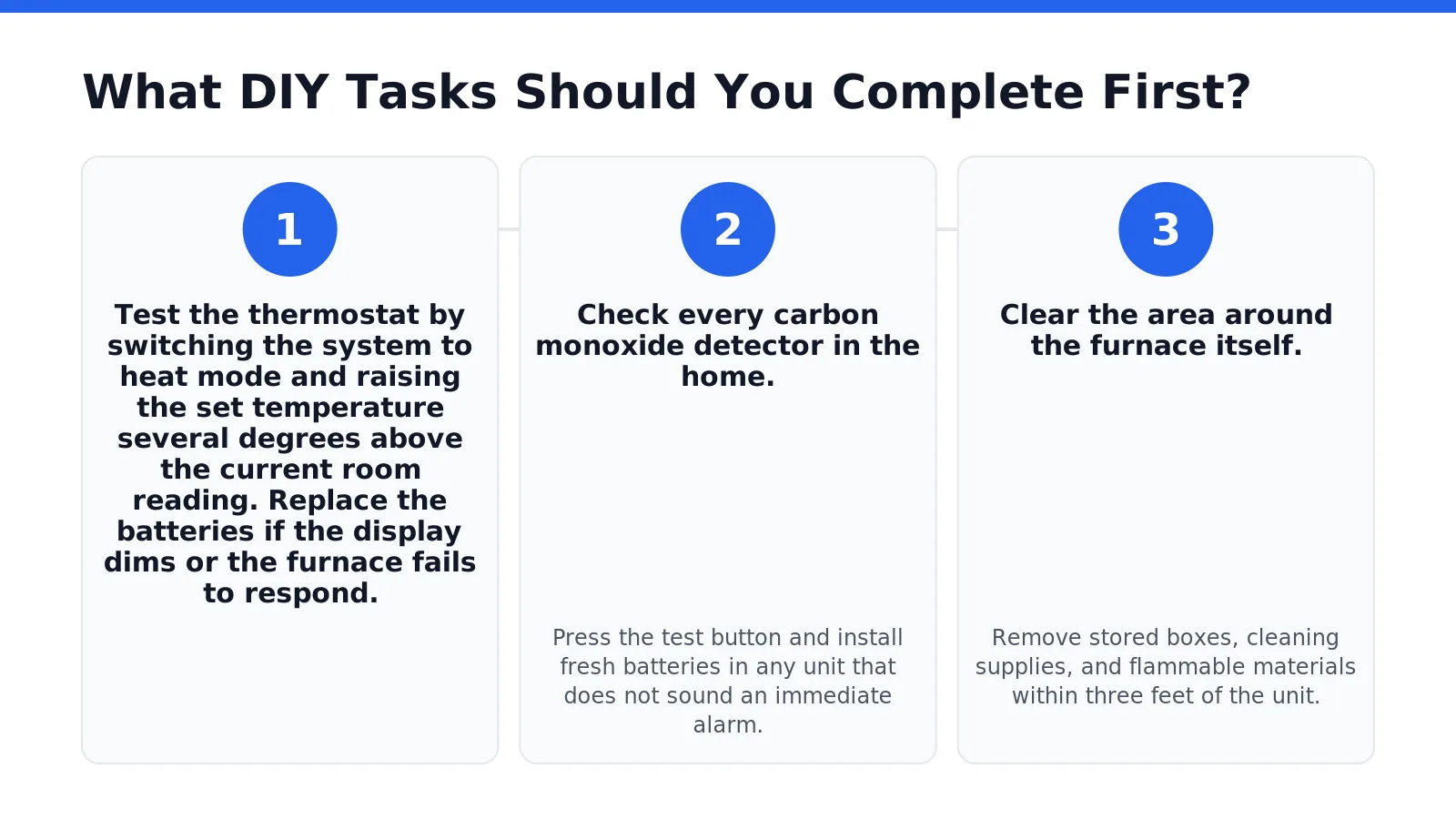
- Test the thermostat by switching the system to heat mode and raising the set temperature several degrees above the current room reading. Replace the batteries if the display dims or the furnace fails to respond.
- Check every carbon monoxide detector in the home. Press the test button and install fresh batteries in any unit that does not sound an immediate alarm.
- Clear the area around the furnace itself. Remove stored boxes, cleaning supplies, and flammable materials within three feet of the unit.
These actions form the foundation of a reliable prepare heating system plan. Homeowners who complete them reduce breakdown risks and set the stage for a thorough fall hvac service inspection. At Highland Heating & Cooling, we believe every homeowner deserves dependable comfort without overpaying for quality service.
What Should a Professional Tune-Up Include?
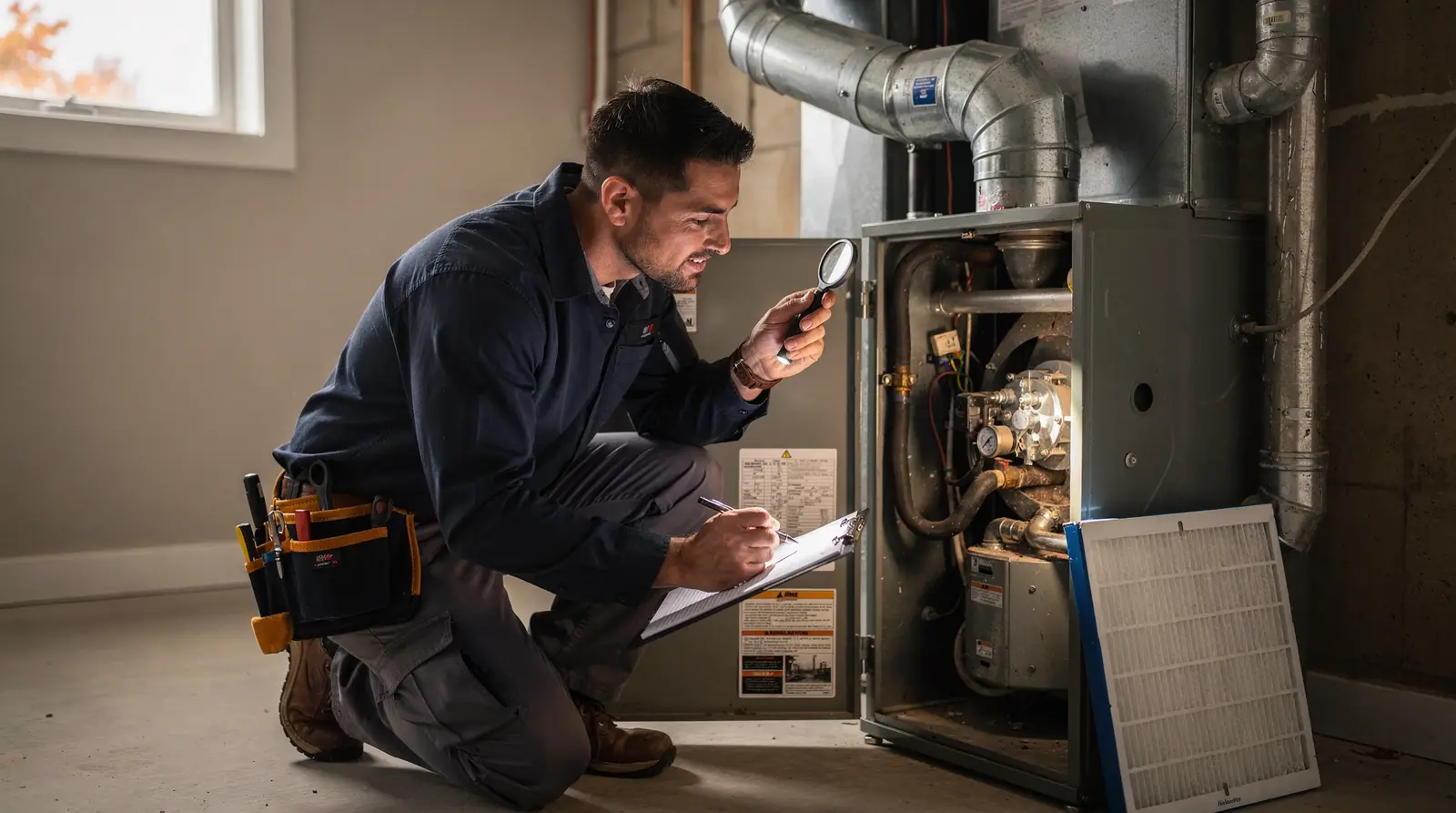
A professional tune-up includes a systematic inspection of thermostat settings, safety controls, and overall system performance. Based in Noblesville, Indiana, our team proudly provides professional heating, cooling, and indoor air quality solutions designed to keep your home comfortable through every season.
Furnace maintenance fall appointments prevent small issues from becoming winter emergencies. Contractors get busy once winter comes, so checking the heating system in the fall makes practical sense. Homeowners who wait risk losing prime scheduling windows and facing longer response times during peak demand.
What Does a Technician Check First?
A typical maintenance check-up should include checking thermostat settings. The technician verifies calibration and confirms the system cycles correctly. This step ensures the furnace delivers consistent temperatures without wasting energy.
What Safety Items Does the Inspection Cover?
A furnace safety checklist guides the technician through critical components. The inspection covers electrical connections, burner operation, and ventilation pathways. Each check reduces the chance of carbon monoxide exposure or mid-winter failure.
The company approaches every project with honesty, craftsmanship, and a commitment to doing the job right the first time. That standard applies to routine tune-ups and complete system replacements alike.
What Should Homeowners Expect From the Service?
A fall hvac service visit should end with clear findings and straightforward recommendations. The goal at Highland Heating & Cooling is to deliver reliable HVAC solutions at a price that makes sense for local families. Clients receive an honest assessment without pressure tactics or inflated repair lists.
To prepare heating system components properly, follow this sequence:
- Schedule the tune-up before cold weather arrives.
- Confirm the technician checks thermostat settings and safety controls.
- Review the inspection report and address any flagged issues promptly.
Scheduling early keeps the system ready before temperatures drop.
How Do You Prepare Your Heating System for Winter?
Preparing a heating system for winter requires a systematic approach that begins well before freezing temperatures arrive. A complete furnace maintenance fall routine combines homeowner tasks with professional fall hvac service to prevent mid-season breakdowns. Homeowners who skip these steps risk system failure on the coldest nights.
What Are the First Steps in a Furnace Safety Checklist?
A furnace safety checklist starts with replacing the air filter. A clogged filter makes the system work harder and reduces indoor air quality, so replacing it is essential before winter. Testing the thermostat comes next. The system should cycle on and off correctly before daily reliance begins.
What Professional Services Prepare a Heating System?
Highland Heating & Cooling provides the services homeowners need to stay comfortable through freezing winter nights. Professional maintenance catches hidden issues that DIY checks miss. The company’s technicians inspect heat exchangers, electrical connections, and burner operation during a comprehensive fall visit.
The process to prepare heating system components follows a clear sequence:
- Replace or clean the furnace filter to restore proper airflow.
- Test the thermostat by switching to heat mode and listening for normal operation.
- Clean supply vents and return grilles throughout the home.
- Clear the area around the furnace of stored items and debris.
- Check carbon monoxide detectors and replace batteries if needed.
- Schedule professional maintenance for internal component inspection.
Cleaning supply vents and return grilles is a necessary step to prepare heating system airflow. Blocked registers force the furnace to work harder. Testing the system before relying on it daily reveals problems while mild weather still allows comfortable troubleshooting. Carbon monoxide detectors provide a critical safety layer that no homeowner should overlook.
What Common Mistakes Should You Avoid?
The most costly mistake homeowners make is waiting until the first cold night to discover a furnace breakdown. Most breakdowns are preventable with a little seasonal furnace maintenance fall preparation. A non-functioning furnace on a freezing night creates an emergency that could have been avoided weeks earlier. The discomfort and rush fees add unnecessary stress to an already difficult situation.
Why Is Skipping Professional Maintenance a Risk?
Skipping professional fall hvac service leaves a system vulnerable to issues a trained eye catches early. A certified technician inspects and services components that keep a furnace safe and efficient. Homeowners who skip this step often face mid-winter failures that simple adjustments would have prevented.
What Happens When Homeowners Delay Repairs?
Delaying repairs turns small problems into expensive failures. A worn belt or dirty sensor ignored in October becomes a complete shutdown in January. Highland Heating & Cooling provides a commitment to quality service, ensuring the job is done right the first time. Homeowners who act early avoid the scramble for emergency appointments during peak season.
To prepare heating system components properly, follow this furnace safety checklist:
- Schedule a professional tune-up before temperatures drop below freezing.
- Replace or clean the air filter to maintain proper airflow.
- Test carbon monoxide detectors and verify they function correctly.
- Professional maintenance identifies hidden wear before it causes a breakdown. The small investment in fall service protects against the larger cost of emergency winter repairs.
FAQ
What is the most important DIY furnace maintenance task?
Replacing or cleaning the furnace filter every 1 to 3 months is the most critical task. It prevents airflow blockage and blower strain, improving performance and indoor air quality.
What does a professional fall inspection catch before winter?
A fall inspection catches worn belts, failing ignitors, and dirty burners. Technicians also verify heat exchanger integrity, test safety switches, and confirm proper venting to prevent carbon monoxide exposure.
Why does a furnace need a fall checkup before cold weather?
A fall checkup catches small problems before they become winter emergencies. It prepares the system for daily use, reduces unexpected breakdowns, and protects against dangerous carbon monoxide leaks and fire hazards.
Conclusion
Completing this fall furnace maintenance checklist before temperatures drop keeps a home safe and warm through the coldest months. Replacing the filter, testing the thermostat, and scheduling professional service catch small issues before they become expensive emergencies. Homeowners who act early avoid the stress of mid-winter breakdowns and protect their families from carbon monoxide risks. Take these steps now to ensure the heating system runs reliably all season long.