
Preparing a heating system for winter starts with a professional inspection by licensed technicians. Highland Heating & Cooling recommends scheduling preventative maintenance before freezing temperatures arrive. This service includes checking the furnace, cleaning components, and ensuring safe operation. A well-maintained system runs efficiently and reduces the risk of breakdowns during extreme cold.
Key Takeaways for Preparing Your Heating System for Winter
- Schedule a professional inspection before freezing temperatures arrive to catch small issues early.
- Replace or clean the air filter first to restore airflow and prevent system overwork.
- Move furniture and rugs away from all registers to maintain balanced airflow and avoid cold spots.
- Open cabinet doors under sinks and seal drafts to protect pipes and reduce heat loss.
What tools do I need for winter heating prep?
A basic toolkit and a few key supplies streamline winter heating prep for any homeowner. Gathering these items before cold weather arrives prevents delays and reduces the risk of a heating emergency.
What basic tools should a homeowner have ready?
A vacuum with a hose attachment tops the list. Erie Institute of Technology notes that vacuuming air vents removes dust and debris that block airflow. A standard screwdriver helps open access panels for filter changes. New air filters, sized to match the existing furnace slot, belong in every furnace winter checklist.
How does a thermostat help prepare a home for cold?
A programmable or smart thermostat manages heating schedules efficiently. New Braunfels Utilities advises keeping the thermostat set to a safe temperature that prevents pipes from freezing. Closer to 68 degrees when the home is occupied. This simple adjustment helps prepare home for cold snaps without wasting energy during vacant hours.
What professional contact should be on hand?
A licensed technician’s phone number helps avoid heating emergency calls during extreme weather. At Highland Heating & Cooling, our team proudly provides professional heating, cooling, and indoor air quality solutions. Scheduling a professional residential HVAC tune-up before freezing temperatures hit catches small issues early. Whether you need a quick repair, preventative maintenance, or a complete system replacement, we approach every project with honesty, craftsmanship, and a commitment to doing the job right the first time.
How do I complete my furnace winter checklist?
A complete furnace winter checklist prevents mid-season breakdowns and keeps heating costs predictable. Homeowners who follow a systematic sequence catch airflow problems before freezing nights expose them.
What should homeowners check first on a furnace?
Replace or clean the air filter before anything else. A clogged filter restricts airflow and forces the system to work harder. Erie Insurance’s winter HVAC guide lists filter replacement as the opening step for seasonal preparation.
How do blocked vents affect winter heating performance?
Furniture and rugs often cover registers and vents, preventing air from circulating properly. Move obstructions away from every vent in the home. Erie Insurance’s maintenance guide confirms that blocked vents make it harder for the HVAC unit to warm the house.
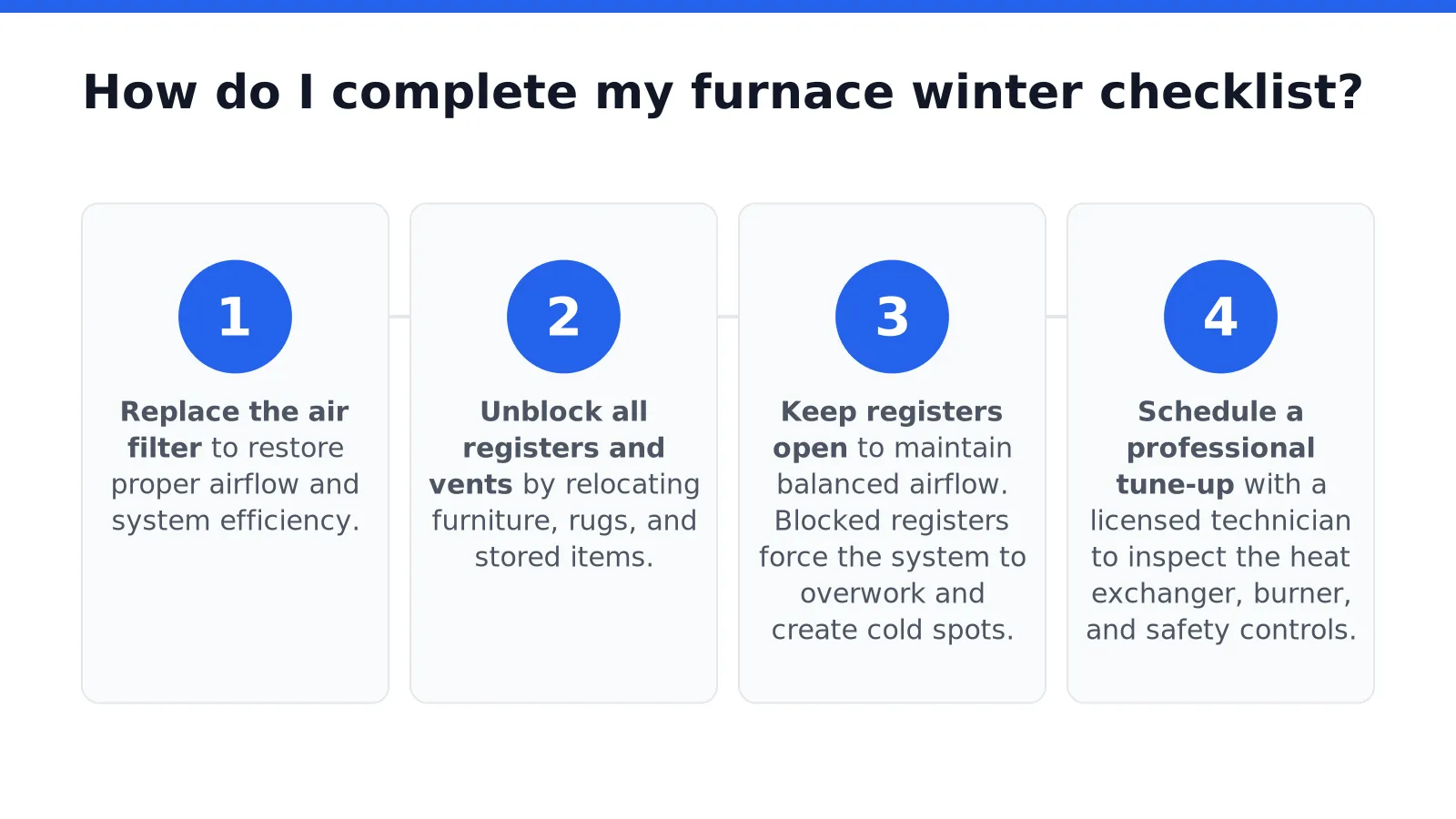
Complete the remaining checklist items in this order:
- Replace the air filter to restore proper airflow and system efficiency.
- Unblock all registers and vents by relocating furniture, rugs, and stored items.
- Keep registers open to maintain balanced airflow. Blocked registers force the system to overwork and create cold spots.
- Schedule a professional tune-up with a licensed technician to inspect the heat exchanger, burner, and safety controls.
Highland Heating & Cooling provides professional heating services for Noblesville, Indiana homeowners. A licensed technician from the company inspects critical components before extreme cold arrives. Skipping the tune-up leaves hidden cracks and failing safety controls undetected until the furnace quits on the coldest night.
How can I prepare my home for cold and avoid heating emergencies?
Preparing a home for freezing temperatures prevents costly damage and system failures. A winter heating prep routine reduces energy strain and eliminates the risk of waking up to a dead furnace on the coldest night of the year. Without these steps, homeowners face burst pipes, skyrocketing utility bills, and the scramble to find emergency service when every contractor is already booked.
What should homeowners do immediately before a hard freeze?
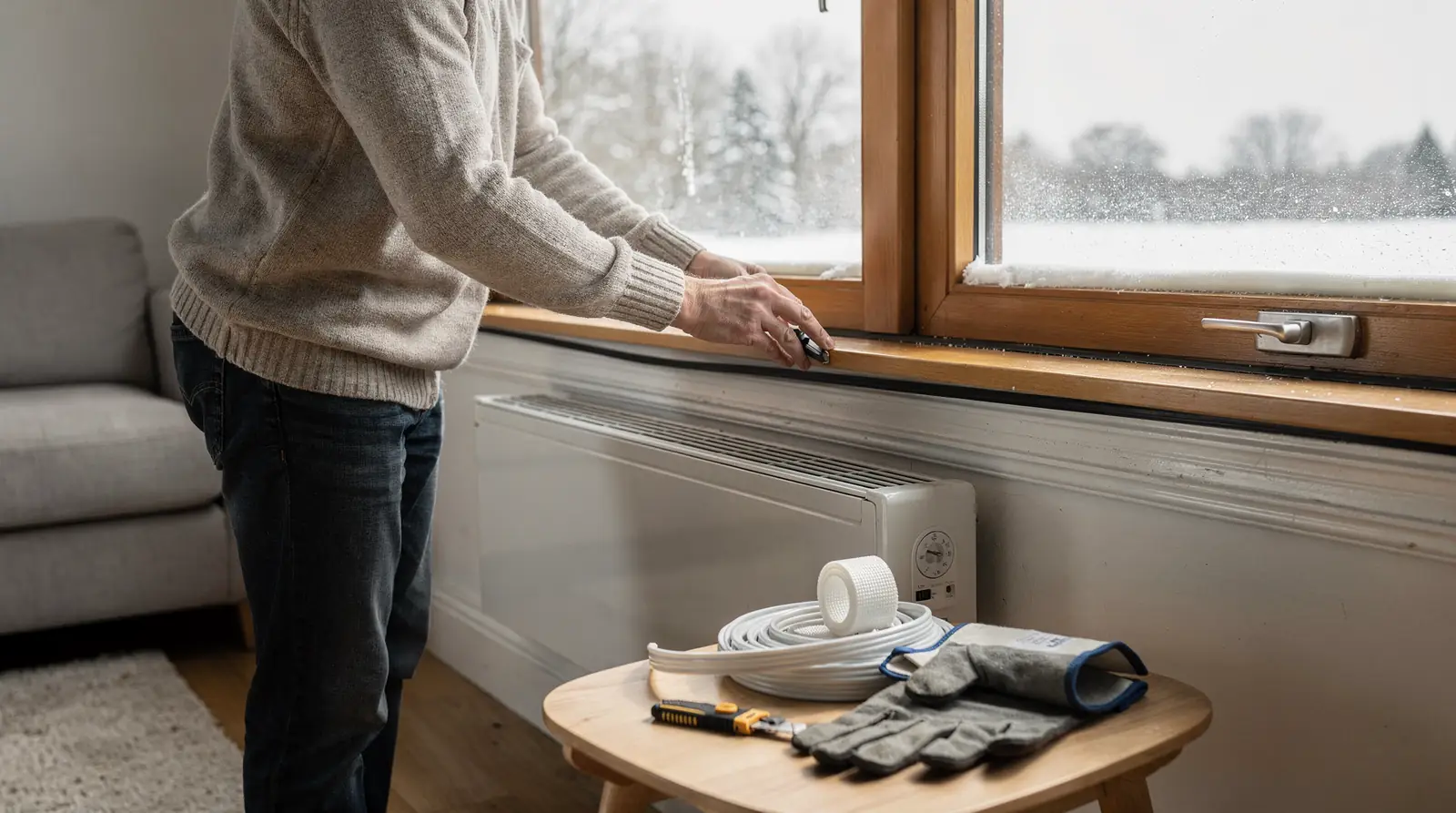
A furnace winter checklist starts with simple, high-impact actions that take less than an hour. These steps protect plumbing and lighten the load on the heating system.
- Open cabinet doors under every sink. Warm interior air circulates around exposed pipes and prevents freezing.
- Set the thermostat to a safe temperature. Occupied homes stay safer and more comfortable closer to 68 degrees.
- Seal drafts around windows and doors with weatherstripping or caulk. Stopping air leaks cuts heat loss and lowers monthly energy bills.
- Clear furniture and rugs away from all supply registers. Blocked vents force the furnace to work harder and create cold spots.
How does a smart thermostat help avoid heating emergencies?
A smart thermostat adds a critical layer of protection when the house sits empty. These devices monitor indoor conditions and alert the owner if temperatures drop dangerously low. Remote control through a smartphone app lets a property manager adjust settings from anywhere, preventing frozen pipes before damage starts. This technology turns a potential disaster into a minor notification.
The final safeguard is a relationship with a qualified contractor. Highland Heating & Cooling provides professional heating solutions designed to keep homes comfortable through every season. Having a reliable local HVAC company on call ensures fast response if the system fails during extreme cold. A homeowner who waits until the furnace quits to find help risks days without heat and far more expensive repairs.
FAQ
What tools do I need for winter heating prep?
A vacuum with a hose attachment, a standard screwdriver, and new air filters sized to match the furnace slot. A programmable or smart thermostat also helps manage heating schedules efficiently.
Conclusion
Preparing your heating system for winter comes down to three actions: replace the filter, clear the vents, and schedule a professional inspection. These steps prevent breakdowns, lower energy bills, and protect your home from frozen pipes. A homeowner who completes this checklist before the first freeze avoids emergency repairs and stays comfortable through the coldest months. Take action now rather than waiting for a midwinter failure.