
When it comes to energy efficiency, energy Information Administration data shows residential electricity prices climbed over recent years. Highland Heating & Cooling provides professional maintenance to help Noblesville homeowners lower bills without sacrificing comfort.
Key Takeaways for Lowering HVAC Energy Use and Costs
- Checking HVAC air filters regularly and installing a programmable thermostat are two low-cost ways to reduce energy use and improve efficiency.
- Adjusting thermostat setpoints, sealing obvious air leaks, and using window coverings strategically all reduce runtime without requiring new equipment. These no-cost habits are a great starting point for homeowners.
- A programmable thermostat automates temperature setbacks throughout the day, eliminating wasted runtime from manual changes when the home is empty. This automation ensures consistent savings without requiring daily attention.
- Routine HVAC maintenance directly cuts energy waste by keeping components clean and airflow unrestricted, helping the system consume less electricity. Scheduling this service annually prevents gradual efficiency loss.
What will you accomplish and what do you need?
This guide delivers a practical action plan to reduce HVAC energy use and lower monthly bills. Comfort stays intact while costs drop. The plan spans immediate no-cost habits, routine maintenance, and high-ROI upgrades. No special tools or advanced skills are required to begin saving on energy today.
What does the action plan cover?
The strategy addresses three tiers of energy efficiency improvement. Tier one involves no-cost behavioral adjustments that cut consumption immediately. Tier two focuses on hvac efficiency through consistent preventative care. Tier three targets strategic equipment upgrades that deliver the strongest long-term returns.
How do homeowners start without spending money?
Simple habit changes produce measurable results. The Shaker Heights Energy Subcommittee confirms that homeowners save on energy without spending a dollar on new equipment. These actions require only awareness and consistency.
Highland Heating & Cooling supports this progression with professional HVAC maintenance that keeps systems operating at peak performance. A well-maintained unit consumes less electricity and lasts longer. The company’s approach ensures dependable comfort without overpaying for quality service.
How can you adjust your thermostat for savings?
Thermostat adjustments deliver immediate reductions in cooling costs without sacrificing comfort. A higher temperature setting shrinks the gap between indoor and outdoor conditions, directly lowering the energy required to run the system.
What temperature should a thermostat be set at in summer?
The optimal summer setting is the highest temperature household members find comfortable. The smaller the difference between indoor and outdoor temperatures, the lower the cooling bill becomes. This principle works because air conditioners consume less energy when they do not fight extreme outdoor heat.
How does a programmable thermostat save money?
A programmable thermostat automates temperature setbacks throughout the day. It raises the setpoint when the home is empty and restores cooler conditions before occupants return. This consistent, automatic adjustment eliminates wasted runtime that manual changes often miss. Homeowners exploring advanced models can review the best smart thermostats compared to find units with learning capabilities and remote control.
Energy efficiency improves most when the system runs less during peak afternoon hours. HVAC efficiency depends on reducing unnecessary cycles, and a well-configured thermostat prevents exactly that waste. Follow these steps to save on energy through smarter temperature management:
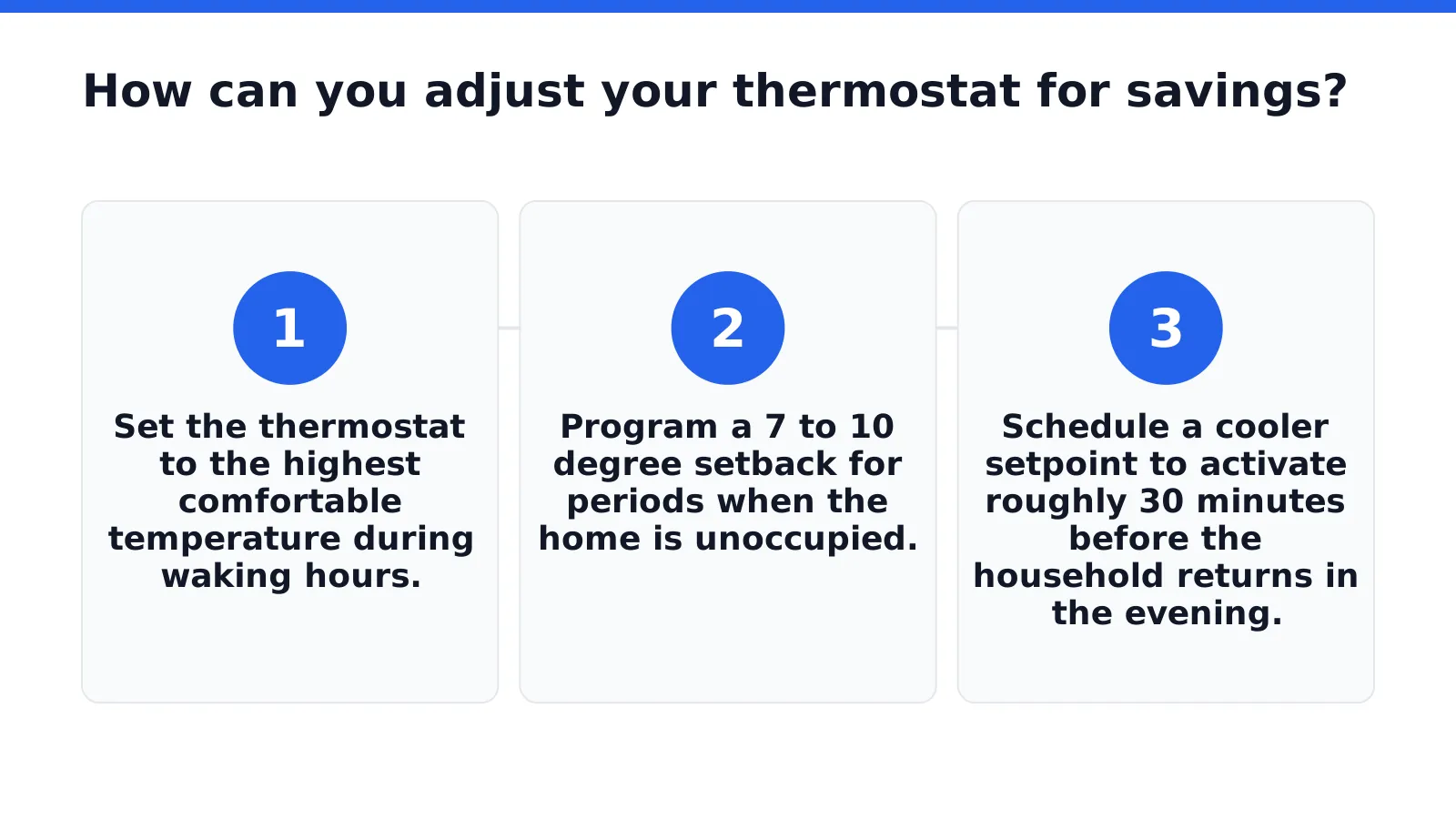
- Set the thermostat to the highest comfortable temperature during waking hours.
- Program a 7 to 10 degree setback for periods when the home is unoccupied.
- Schedule a cooler setpoint to activate roughly 30 minutes before the household returns in the evening.
Highland Heating & Cooling technicians often find that simple schedule discipline trims monthly bills noticeably. The strategy keeps the house warmer during the day and cooler at night, matching system operation to actual occupancy patterns.
What routine maintenance cuts energy waste?
A clogged filter alone forces the system to work harder, consuming more electricity for the same cooling output.
Energy efficiency depends on several straightforward maintenance tasks that homeowners and property managers can schedule without major expense. The Shaker Heights Energy Subcommittee recommends a simple test: mark a calendar to check filters regularly by holding each filter up to a light source. When light no longer passes through, the filter needs replacement. Dirty filters block airflow and cause the blower motor to run longer cycles, which wastes energy and strains equipment.
How often should HVAC filters be checked?
Filters deserve inspection regularly during peak heating and cooling seasons. Homes with pets, recent renovations, or high pollen counts often require more frequent checks. A filter that looks dark or clogged at the two-month mark has already begun reducing system performance.
HVAC efficiency also hinges on coil cleanliness. Dirty evaporator and condenser coils degrade air conditioning performance and increase operating time, according to guidance from North Carolina’s electric cooperatives. Cleaning filters and coils periodically restores proper heat transfer and shortens run cycles. The process involves three core steps:
- Turn off power to the unit at the breaker or service disconnect.
- Remove debris from condenser coils using a soft brush or coil cleaner, then rinse gently.
- Replace or clean the air filter before restoring power and testing operation.
Does professional maintenance improve energy savings?
Professional preventative maintenance catches issues that visual inspections miss. A licensed technician measures refrigerant charge, tests electrical connections, and verifies airflow across the coil. Highland Heating & Cooling provides the services homeowners need to stay comfortable, improve efficiency, and protect their HVAC investment. Technicians identify small problems before they become expensive failures that waste energy for weeks unnoticed.
Skipping these tasks carries a real cost. A system with dirty coils and a clogged filter runs longer to meet the thermostat setpoint. That extra runtime shows up directly on monthly utility statements. Property managers who schedule seasonal tune-ups avoid that hidden drain and extend equipment life at the same time.
Which high-ROI upgrades lower your bills most?
High-ROI upgrades target the largest energy consumer in a building. HVAC systems account for 40 to 50% of total energy use, according to the U.S. Energy Information Administration. Failing to optimize that load forfeits hundreds of dollars annually. Three specific upgrades deliver measurable payback by slashing runtime and improving hvac efficiency.
What thermostat change cuts cooling costs automatically?
A programmable thermostat reduces runtime without manual adjustment. The device consistently raises the temperature setting when the home is empty. Homeowners save money because the system avoids cooling unoccupied space. Lower runtime directly shrinks monthly bills. ENERGY STAR®, a program of the U.S. Environmental Protection Agency and the U.S. Department of Energy, confirms that owners of programmable thermostats should increase the air conditioning temperature setting during vacant hours to capture these savings.
Which system-level investment yields the deepest long-term savings?
A complete system replacement delivers the most substantial long-term reduction in energy costs. Aging equipment loses efficiency gradually, forcing higher electricity consumption for the same comfort level. Highland Heating & Cooling approaches every replacement project with honesty and craftsmanship. The company installs modern systems engineered for superior energy efficiency. Homeowners who delay this upgrade continue paying elevated utility rates for declining performance. New equipment restores peak efficiency and stabilizes monthly expenses.
Numbered steps for prioritizing high-ROI upgrades:
- Install a programmable thermostat to automate temperature setbacks during unoccupied periods.
- Deploy window fans during cooler evening hours to supplement air conditioning and reduce compressor runtime.
- Replace an aging system with a modern, high-efficiency unit installed by a qualified local contractor.
Window fans offer a low-cost method to save on energy by pulling in cool outdoor air. This strategy lessens the burden on the air conditioner during mild weather. Pairing behavioral adjustments with strategic equipment upgrades maximizes the return on every dollar spent.
What common mistakes should you avoid?
Homeowners and property managers often undermine energy efficiency through a handful of preventable errors. These missteps force equipment to work harder, driving up monthly bills and accelerating system wear. Avoiding them protects both comfort and the bottom line.
Why does a dirty filter increase energy costs?
A clogged air filter restricts airflow, making the HVAC system consume more power to move conditioned air through the home. The Shaker Heights Energy Subcommittee recommends checking filters routinely by holding them up to a light source. When light no longer passes through, replacement is overdue. This simple step directly improves hvac efficiency and indoor air quality.
How does thermostat misuse waste energy?
Setting the thermostat too low in summer or too high in winter creates an unnecessarily large gap between indoor and outdoor temperatures. A smaller differential reduces the cooling load and lowers the bill. Programmable thermostats eliminate the waste of conditioning an empty house by automatically adjusting settings when occupants are away. Consistent, moderate setpoints save on energy without sacrificing comfort.
Skipping professional maintenance is another costly oversight. Minor issues like refrigerant leaks, dirty coils, or loose electrical connections degrade performance silently over time. Highland Heating & Cooling provides the routine inspections and tune-ups homeowners need to catch these problems early. Following a structured seasonal HVAC maintenance checklist keeps equipment running at peak efficiency year-round.
FAQ
What is the simplest way to start reducing HVAC energy use without spending money?
Adjusting thermostat setpoints, sealing obvious air leaks, and using window coverings strategically all reduce runtime without requiring new equipment.
How does a programmable thermostat lower energy costs?
A programmable thermostat automates temperature setbacks throughout the day, eliminating wasted runtime from manual changes when the home is empty.
What routine maintenance directly cuts HVAC energy waste?
Routine HVAC maintenance directly cuts energy waste by keeping components clean and airflow unrestricted, helping the system consume less electricity.
Conclusion
Reducing HVAC energy use and costs comes down to consistent maintenance, smart thermostat habits, and strategic upgrades. Homeowners who check filters regularly, schedule professional tune-ups, and install programmable thermostats capture the biggest savings without guesswork. These steps eliminate wasted runtime and protect equipment performance year after year. The next move is simple: pick one action from this list and schedule it today.